
English

Simplified Long Non-Coding RNA (lncRNA) CRISPR Parallel Perturbation Experimental Guide
share
¥8000.00
¥0.00
产品详情
Simplified Long Non-Coding RNA (lncRNA) CRISPR Parallel Perturbation Experimental Guide
— Latest Methods from STAR Protocols
🌱Introduction: Why Study lncRNA CRISPR Screening?
CRISPRi is a powerful high-throughput tool for functional gene discovery, but applying it to long non-coding RNAs (lncRNAs) presents unique challenges:
lncRNA functional effects are subtle, with low signal-to-noise ratio
Incomplete annotation; some lncRNAs overlap with protein-coding genes or enhancers
High false-positive rates
The authors propose a "Simplified Parallel Perturbation Protocol": :
a cell-type-specific dual-sgRNA library that enables simultaneous lncRNA functional screening under multiple conditions — exploring cell-context-specific lncRNA functions with higher efficiency and lower cost.
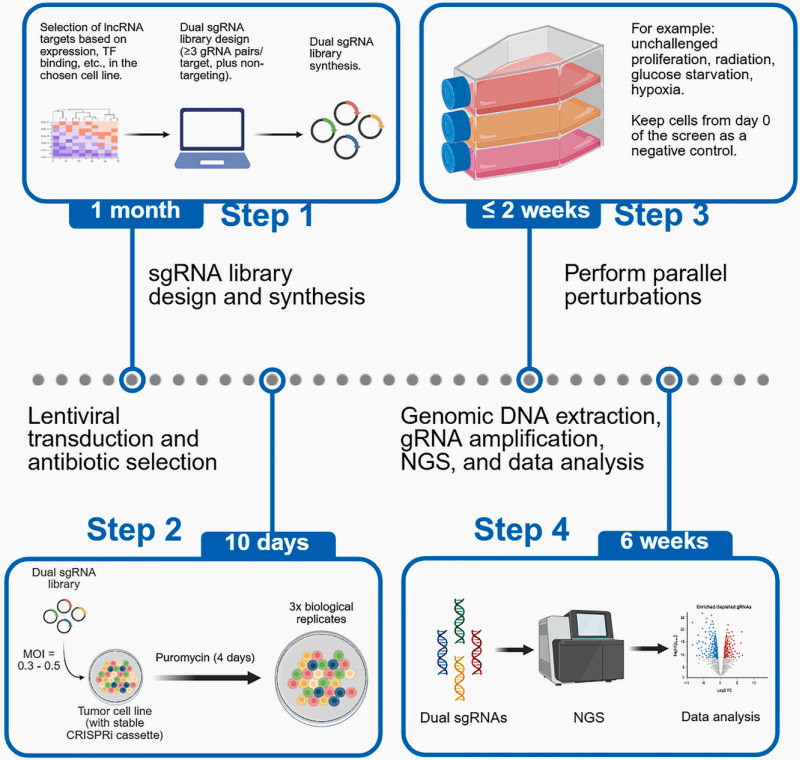
Figure 1: lncRNA CRISPR Parallel Perturbation Workflow
💡Key Innovations at a Glance
🧬 Dual-sgRNA Design: Enhanced knockdown efficiency and specificity
📈 Compact Library Structure: Enables multi-condition parallel screening
🧫 Cell-Type Customization: Tailored to cell-type-specific transcriptional profiles
🔁 Scalable and Reusable: Adaptable to diverse biological questions and conditions
🧫Step 1: Design the Dual-sgRNA Library
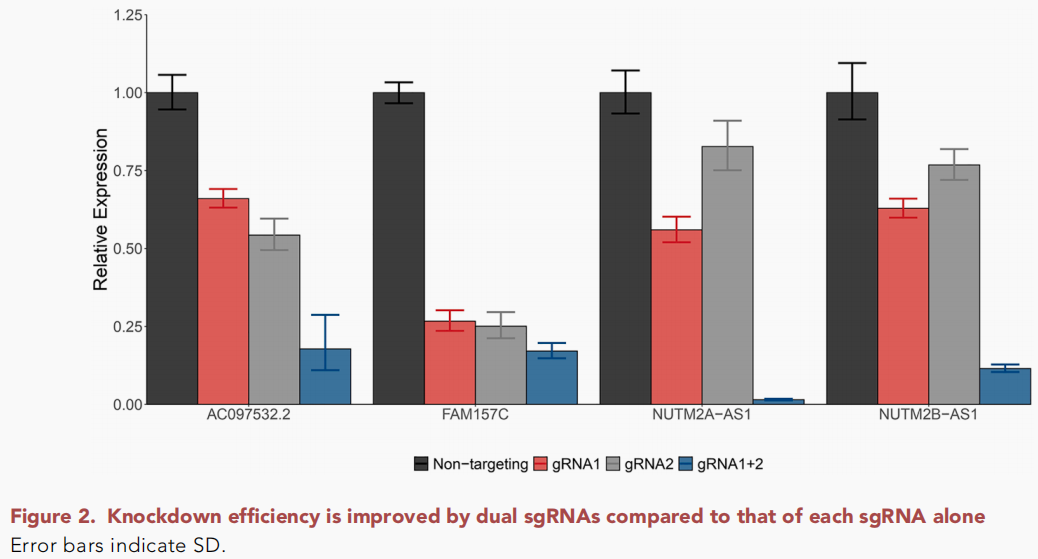
Figure 2: Knockdown efficiency comparison — dual vs. single sgRNA
1 Select Target lncRNAs
Example: SNHG6 in K562 cells. Selection criteria:
High expression level
SNHG6 TSS distance >1 kb from the nearest protein-coding TSS
≥4 transcription factor binding peaks at the promoter
Exclude misannotated or repetitive genes
These criteria ensure selected lncRNAs have high functional potential in the target cell type.
2 sgRNA Design Strategy
Use the CRISPick platform
Parameters: GRCh38 / CRISPRi / SpCas9
Add controls: 10 essential gene sgRNAs + 250 non-targeting controls
Design ≥6 sgRNAs per lncRNA, paired to form dual sgRNAs
Ensure sequences lack restriction sites (BstXI, Bpu1102I, Esp3I)
💡 Tip:
Each sgRNA must begin with "G" for efficient U6 promoter transcription.
🧬Step 2: Clone and Construct the Library
The process takes approximately 2-12 weeks:
Vector digestion and oligonucleotide synthesis
PCR amplification and gel purification (10-12 cycles)
T4 ligation and electroporation into competent cells
Colony PCR verification + Sanger sequencing
Midi-scale amplification and NGS quality assessment
📦 Recommended library size: No more than 4,000 sgRNA pairs.
This ensures adequate coverage while enabling flexible use across multiple perturbation conditions.
🔧Step 3: Establish Stable CRISPRi Cell Lines
Build stable dCas9-expressing K562 cells:
Use fluorescent-tagged dCas9 vectors:
pHR-SFFV-dCas9-BFP-KRAB
pHR-UCOE-SFFV-dCas9-mCherry-ZIM3-KRAB
Enrich positive populations by multiple rounds of flow sorting
Antibiotic selection (e.g., puromycin) can also generate stable lines.
Validate knockdown efficiency before proceeding to the screen. In this study, SYVN1 and SEL1L knockdown efficiency was >90%.
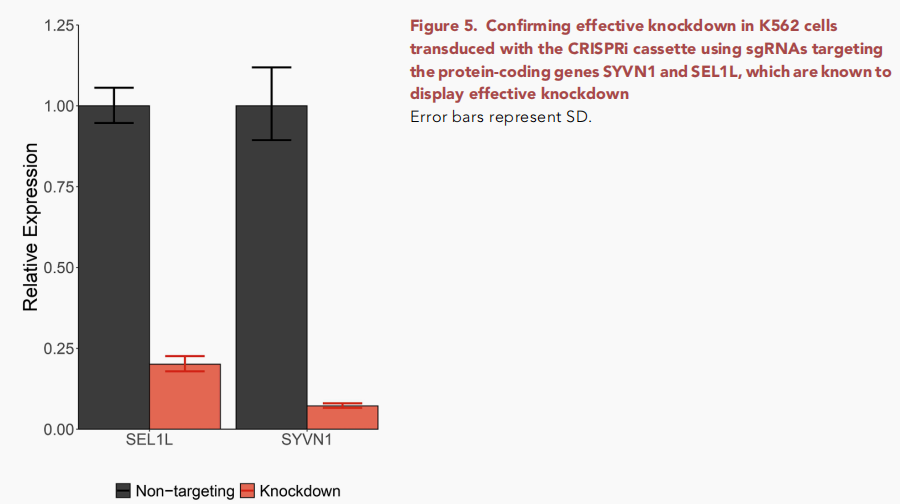
Figure 3: qPCR validation of SYVN1 and SEL1L knockdown
🧪Step 4: Parallel Perturbation Screening
Perturbation Type | Treatment Condition | Purpose |
Control | Standard culture | Baseline growth |
Megakaryocyte differentiation | 0.5 nM PMA 0.5 nM PMA induction, 48h48h | Identify pro-differentiation lncRNAslncRNA |
Acid stress | 1 mg/mL NaHCO₃ | Acid survival capacity |
Oxidative stress | 35 μM H₂O₂ | Antioxidant response lncRNAslncRNA |
Energy metabolism reprogramming | Glucose-free culture + 10 mM + 10 mMgalactose | Mitochondrial metabolism dependency |
Once stable cells are obtained, test multiple conditions simultaneously:
Maintain ≥500-1000x coverage per group with three biological replicates.
Monitor BFP-positive fraction by flow cytometry or selection purity to ensure screening consistency.

Figure 4: Perturbation calibration example
🧮Step 5: Data Analysis and Validation
1️⃣ NGS Data Analysis
Use MAGeCK software to calculate enriched/depleted genes
Compare performance of positive and negative control sgRNAs
Check inter-replicate correlation (R² ≈ 0.96)
2️⃣ Result Validation and False Positive Elimination
Confirm sgRNAs do not affect adjacent protein-coding gene expression
Check for copy repeats or enhancer interference
Individually validate hits by RT-qPCR and growth competition assays
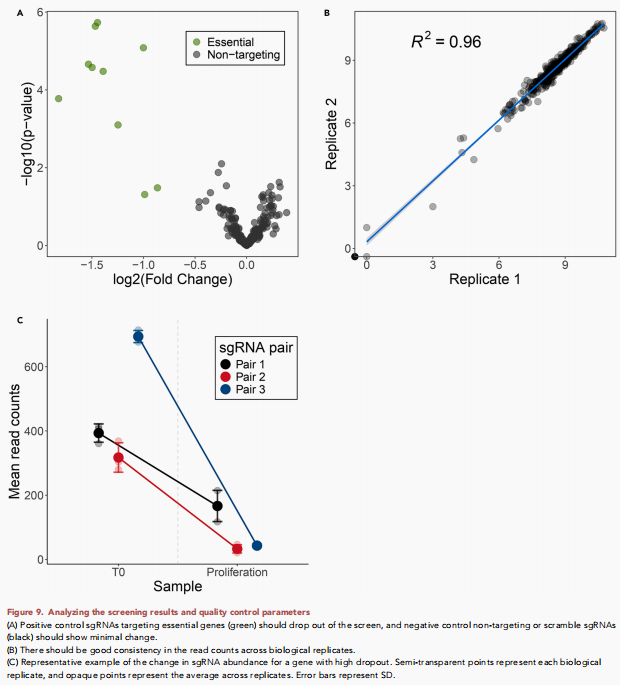
Figure 5: Screening result analysis and QC parameters
🌟Results and Insights
Dual-sgRNA design significantly enhances knockdown
Compact library enables multi-condition parallel perturbation
TF binding peak-based selection improves lncRNA hit rate
The overall approach is low-cost, highly reproducible, and provides a powerful tool for studying cell-state-dependent lncRNA function.
⚠Experimental Limitations and Optimization Tips
Incomplete lncRNA annotation → integrate TF peak and DNase site information
Low transduction efficiency in some cells → consider alternative viral systems
sgRNA expression depends on promoter strength
Subtle-effect lncRNAs require extended perturbation time or higher coverage
🧩Conclusion
This STAR Protocols study provides a reproducible, scalable standard protocol for lncRNA CRISPRi parallel perturbation experiments.
Using a compact, precise library with parallel multi-perturbation design, it successfully addresses the high-throughput challenges of lncRNA research
— enabling systematic exploration of non-coding RNA functions across different cellular states.
📖 References
Hazan J.M., Lahoud-Jeries N., Bester A.C. (2025).
Protocol for simplified parallel perturbations using an abridged long non-coding RNA CRISPR library.
STAR Protocols, 6(12): 104110.
Follow Us

Tel:+86 15336557985
E-Mail:service@generulor.com
Micromessenger
Scan to consult
Linkedin
LIN HUABING
Teams:15022705442@163.com